

Rolling Shutters vs. Exterior Solar Shades: Which Is Right for Your Central Oregon Home?

Central Oregon homes experience plenty of sunshine throughout the year, which can make window coverings an important part of home comfort, privacy, and energy management. But with several exterior shading options available, how do you know which solution is right for your windows?
Two popular options are rolling shutters and exterior solar shades. While both can help manage sunlight and heat, they serve different purposes and offer different levels of protection, privacy, and light control.
Understanding the differences between rolling shutters in Central Oregon and exterior solar shades can help you choose a solution that fits your home's needs, your lifestyle, and the way you use each room.
What Are Rolling Shutters?
Rolling shutters are exterior window coverings made from interlocking slats that roll up into a housing when they are not being used. When closed, they create a solid barrier over the window.
One of the biggest advantages of rolling shutters is their versatility. Depending on the product and installation, they can provide privacy, light control, insulation support, and protection from outdoor conditions.
For homeowners looking for rolling shutters in Central Oregon, these systems can be especially useful in rooms where complete light control or increased privacy is a priority.
Rolling shutters can also be designed to operate manually or with a motorized system. Motorized rolling shutters make it possible to adjust multiple windows conveniently and can be incorporated into smart-home routines depending on the system.
What Are Exterior Solar Shades?
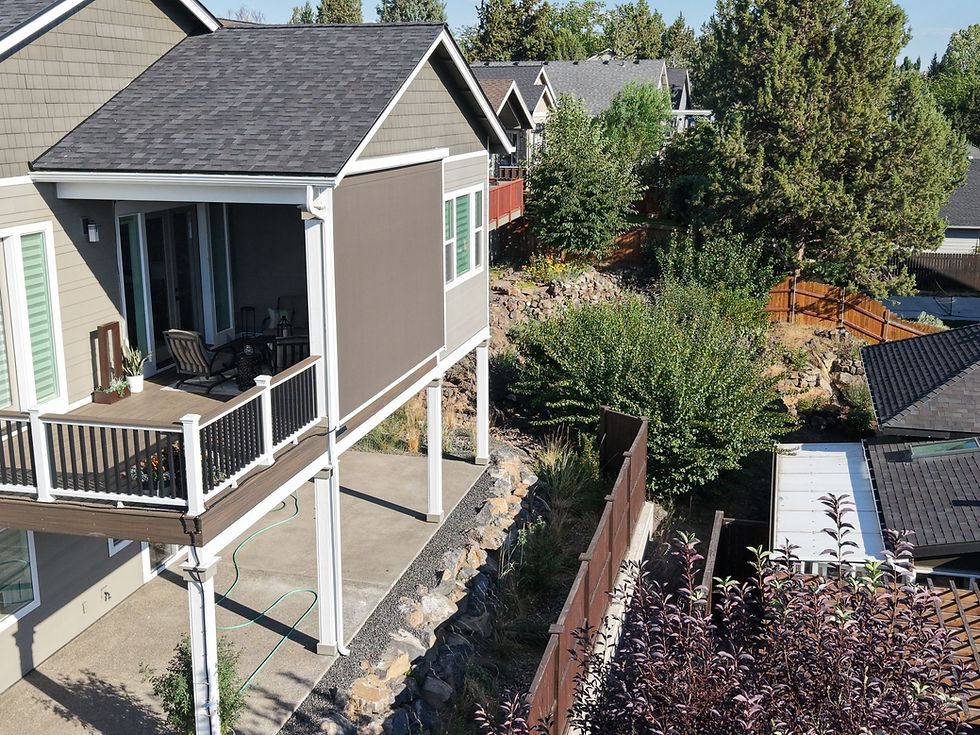
Exterior solar shades are designed to reduce the amount of sunlight and solar heat entering through your windows while still allowing you to maintain some visibility to the outdoors.
Unlike rolling shutters, solar shades use a screen-like fabric rather than a solid covering. The openness of the fabric can affect how much light, heat, and visibility pass through.
Homeowners considering exterior solar shades in Bend OR may appreciate solar shades for spaces where they want to reduce glare and heat while maintaining a connection to the outdoors.
They can be particularly useful for living rooms, patios, offices, and other areas where natural light and outdoor views are important.
Rolling Shutters vs. Exterior Solar Shades: The Biggest Differences
While both products provide exterior sun control, the experience of using them can be quite different.
Light Control
Rolling shutters offer a higher level of light control because the solid shutter can cover the window almost completely when closed. Depending on the installation and product design, they can provide near-total darkness.
Exterior solar shades filter sunlight rather than creating a solid barrier. The amount of light that remains depends on the fabric's openness and color.
If your primary goal is maximum light reduction, rolling shutters may be the better choice. If you want to reduce glare while keeping some natural light, solar shades may be more appropriate.
Heat and UV Control
Both options can help manage the impact of direct sunlight.
Exterior solar shades are specifically designed to reduce solar heat and glare before sunlight reaches the interior of your home. This can make them a practical choice for windows that receive significant sun exposure.
Rolling shutters can also help reduce solar heat gain when closed by creating a physical barrier between the window and the outside environment.
Both options can also help reduce exposure to UV radiation that can contribute to fading of furniture, flooring, artwork, and other interior surfaces.
The best option depends on the specific window, orientation, room, and level of control you want.
Privacy
Rolling shutters provide a strong privacy barrier when closed because they create a solid covering over the window.
Solar shades can provide varying levels of daytime privacy depending on the fabric selected. However, visibility and privacy can change based on lighting conditions inside and outside the home.
If privacy is one of your primary concerns, rolling shutters may offer more comprehensive coverage.
Outdoor Views
This is an area where exterior solar shades can have an advantage.
Solar screen fabrics can reduce glare and sunlight while still allowing you to see outside. The level of visibility depends on the fabric's openness and other product specifications.
Rolling shutters, on the other hand, block the view when they are fully closed. For homeowners who want sun control without giving up their Central Oregon scenery, exterior solar shades may be an appealing option.

Can Rolling Shutters and Solar Shades Be Motorized?
Yes, motorization is available for many exterior shading systems.
Motorized rolling shutters can make it easier to adjust window coverings throughout your home without manually operating each one. Depending on the system, homeowners may also have options for remote operation, scheduling, or integration with smart-home technology.
Exterior solar shades can also be motorized. This can be particularly convenient for hard-to-reach windows or larger areas with multiple shades.
Motorization can also make it easier to create consistent routines. For example, shades may be programmed to adjust during periods of intense sunlight or based on your preferred schedule.
The available controls and smart-home compatibility will depend on the specific system.
Which Option Is Better for Your Central Oregon Home?
There is not necessarily one winner between rolling shutters and exterior solar shades. The right choice depends on what you want your window coverings to accomplish.
Rolling shutters may be a good fit if you prioritize:
Maximum light control
Privacy
A solid exterior barrier
Flexible operation
Motorized control
Additional protection for windows
Rooms where complete coverage is important
Exterior solar shades may be a good fit if you prioritize:
Reducing glare
Managing solar heat
UV protection
Maintaining outdoor views
Natural light
A more open appearance when shades are in use
Motorized operation
In many homes, there is no reason to use the same product on every window.
Why a Combination Approach Can Make Sense
Different rooms have different needs. A bedroom may benefit from the privacy and light-blocking capabilities of rolling shutters, while a living room with a beautiful outdoor view may benefit more from solar shades.
This is where Custom Shade Solutions can be especially valuable. Instead of choosing one window treatment for your entire home, you can consider the orientation, function, size, and use of each space.
For example, rolling shutters could be used in bedrooms or areas where privacy and darkness are priorities, while exterior solar shades could be installed in living spaces where homeowners want to reduce glare without completely blocking their views.
A combination approach can give you more control over how sunlight, privacy, and visibility are managed throughout the home.
Choosing the Right Window Covering
When comparing rolling shutters in Central Oregon with exterior solar shades, start by thinking about what you want the window covering to accomplish.
Do you need complete darkness in a bedroom? Is glare making a living room uncomfortable? Are you trying to protect furnishings from direct sunlight? Do you want to maintain views of the outdoors? Would motorized operation make certain windows easier to manage?
These questions can help narrow down the best solution.
It is also important to consider each window individually. Window orientation, size, location, and surrounding conditions can all influence which product makes the most sense.
The goal is not simply to find a window covering. It is to find a solution that works with your home's architecture, your daily routines, and the way you want each space to feel.
Find the Right Shade Solution for Your Home
Both rolling shutters and exterior solar shades can provide meaningful benefits for Central Oregon homeowners, but they approach sunlight and privacy differently.
Rolling shutters provide solid coverage and strong light and privacy control, while exterior solar shades offer solar protection and glare reduction while maintaining more of the outdoor view.
For some homeowners, the best solution may be one or the other. For others, combining both products throughout the home may provide the greatest flexibility.
With the right Custom Shade Solutions, you can create a window treatment plan based on the needs of each room rather than trying to make one product work everywhere.

Frequently Asked Questions
What's the difference between rolling shutters and exterior solar shades?
Rolling shutters use solid interlocking slats that create a physical barrier over the window when closed. Exterior solar shades use specialized screen fabrics to reduce sunlight, heat, and glare while generally maintaining some visibility to the outdoors.
Do rolling shutters block light completely?
Rolling shutters can provide a very high level of light control and, depending on the specific product and installation, can create near-total darkness when fully closed. The exact level of light blockage can vary by system.
Can both be motorized and controlled from a phone?
Many rolling shutters and exterior solar shades are available with motorized operation. Some systems can also offer remote or smartphone controls and smart-home integration, depending on the specific product and setup.
Which option is better for heat and UV control?
Both rolling shutters and exterior solar shades can help reduce the effects of direct sunlight. Solar shades are designed specifically to filter solar heat and glare while maintaining visibility, while rolling shutters create a solid barrier when closed. The best option depends on the window and your priorities.
Can I use rolling shutters on some windows and solar shades on others?
Yes. Using different window coverings throughout a home can make sense because different rooms have different needs. Rolling shutters may work well where privacy and light control are priorities, while solar shades can be useful in spaces where homeowners want to reduce glare and heat while maintaining outdoor views.


Comments